I have a love/hate relationship with public transportation here in Lima. While I love the fact that's cheap, convenient and can get me pretty much anywhere I want to go, I hate how crowded and uncomfortable it is. And dirty. And cramped. And dangerous. But apart from that, I like taking the bus! :D
You can catch a bus or combi from just about any main street in Lima, and the cost to go from one end of the line to the other is rarely more than a sol - about 35 cents US (at the current exchange rate). If you're just going a few blocks, you can ride for a 'china' - that's the slang term for a Peruvian 50 centimos piece.
Despite great prices, the transportation here is really substandard for a city of this size. Buses and vans are poorly maintained, and often carry far too many passengers. In the race for paying customers, the drivers speed and weave through traffic, trying to get to the next 'paradero' (bus stop) before the other buses. While there are laws and regulations, it's too easy for drivers and company owners to get by on bribery. Too many people are killed and injured each year.
Fortunately, it seems the city is working on it, though - the new high speed bus line is supposed to be up and running soon, and progress has begun again on the electric train system that's been sitting unfinished since the 80's. It will be exciting to see it finished - and I look forward to riding in the new buses!
Last night we were all very excited about the chance of seeing 'La Teta Asustada' win for Best Foreign Language film at the Oscars. Unfortunately, it didn't win, but as my husband said, 'At least the Oscar went to South America'. (I say 'Darn you, Argentina!)
But I absolutely love how events like this pull Peruvians together as a country. People who had never watched the Oscar ceremonies before - shoot, people who had never heard of the Academy Awards before - were all excited and star struck at the fact that another Peruvian had done good and put us in the limelight. Magali Solier, the star of 'La Teta Asustada' has been featured and interviewed on news programs all week, and her trip to Hollywood for the ceremony was chronicled for those of us at home. And such a trip it was. I couldn't help but fall just a little bit in love with her, this young woman from Ayacucho who grew up speaking Quechua during the difficult years when Sendero Luminoso was making life dangerous and difficult for people in Peru. The movie (called “The Milk of Sorrow” in English) explores abuses inflicted on Peruvian women during that time period.
Here in Lima, a giant screen was set up in the main square to show the Oscars live. Even though the movie didn't win, it was a great moment for Peru, and the movie itself gives hope that we are moving on from the tragedies in Peru's past.
So, when last we visited, I told you about all the paperwork we had and how we had turned it all in at the various windows. All the hard work was done, and basically it was just a matter of coming back to have a new (duplicate) carnet de extranjeria handed over to me. I was under the impression that I would not need to take a new picture, that they would just use the digital photo they had from before - that's what they did on my LAST duplicate carnet.
Although they had told us to come back Saturday for the tasa anual, and the next Wednesday for the duplicate carnet, we skipped Saturday and did it all Wednesday. No point in making more trips than we had to.
So, we show up Wednesday and went to the window 18 with our receipt. No. We had to go to window 6. So we go to window six, and had to give them some information - height, weight, hair and eye color stuff. Then we were told everything was ready, and to go have a seat by the little room where they take the pictures.
Wait... WHAT? I need a picture??? UGH. If I'd know, I would have, oh, I don't know, maybe washed my hair instead of just throwing it back in a ponytail.
But I digress. We went off and waited, and about 10 minutes later, they called my name. 'Yes, Senora, it seems we don't have a record of you paying the prorroga of residencia, please go to window 2, 3 or 4 and get that taken care of.'
SIGH.
Ok, we go to the window, and he tells me I owe for one year - S/.41.04, take this form (F-007, what a surprise ;)) and pay at the Banco de la Nacion, then come back here. We also needed: A copy of my passport, a copy of my carnet (we used the police report), a copy of my husband's DNI, a copy of the Acto de Matrimonio, and a letter from my husband (a carta de garantia) saying that he vouched for me morally and financially. We didn't have a new carta de garantia, and the really nice guy in Window 2 told us it wasn't a problem, just to write one out by hand while we were waiting in line for the bank. So that's what we did.
We took all that back to window 2, and were once again told to wait. A few minutes later, they called me for the picture. They took a set of digital fingerprints, and had me sign it, took the picture, then sent me out to wait again. About 10 minutes later, they called me and handed me my card.
WE WERE FINISHED!!!
Some things to take away - It didn't seem to matter that I was late paying the Prorroga, and because I'm a resident married to Peruvian, I didn't have to pay the fine for being late on the tasa anual. If you are NOT in one of the exonerated categories (MTP or religious), I would highly recommend that you pay the tasa on time to avoid paying the fine (up to $100 for the year, I believe).
Getting my new carnet de extranjeria was as painful as I thought it would be, but now that it's all over, it really wasn't that bad. I think the worst part was standing in the bank line with Mr. AVANZA! AVANZA!
One thing I learned that I hadn't been aware of: The annual TASA is something that everyone has to pay, but those of us married to Peruvians can file for an exemption. Ok, I knew that part, except that I didn't realize the exemption was ONLY for certain classes of residents, namely religious workers and those married to Peruvians (MTP). That little fact turned out to be golden for me, since I never paid it last year. If I wasn't MTP, I would have had to pay a big juicy fine. But since I am MTP, I just had to pay for the exoneration for last year (and for this year, since it was due again). And then pay for my Prorroga, which for some reason only cost 41 soles. I thought I would need to pay 2 years worth, but hey, whatever.
Last week, we went to make the police report (denuncia policial) to report my carnet as lost. That involves going to the police station closest to your home and also paying S/.3.60 at Banco de la Nacion so that you can have a copy of the actual report. We paid at the bank first, then went to make the report and give them a copy of the payment receipt. We had to return the next day to pick up the print-out of the report.
Next, we made sure we had all of the following paperwork BEFORE we went to immigrations: 1) Several copies of the police report. 2) A new copy of our Acto de Matrimonio - you have to get a new one, to prove that you are still married (this is assuming you have a CE because you're MTP) 3) Several copies of the picture page of my passport. 4) Several copies of the front and back of my husbands DNI 5) a "Carta de Garantia" - this is a letter of guarantee, that states the Peruvian spouse will be responsible for you both morally and financially. (I told my husband he's a brave man, to guarantee my morality :D) I was surprised to find out that this could be a simple handwritten note, as long as it has all the necessary details on it.
This is turning into a long post, so I'll make a 'part 2' tomorrow.
The carnet de extranjeria is a identification card for foreigners here in Peru. It's pretty much the Peruvian equivalent of a US 'Green Card'. There are various ways of getting one, depending on what type of residency you have - married to a Peruvian, investor, retiree, etc. Most of them allow you to work legally in the country.
Every year, you have to go pay some taxes/fees and get a couple of stickers on it. Well, last year, I never did it. I haven't done it yet this year either. To top off the bad situation, I've lost my carnet - as well as my US Passport. So, I'm basically traveling around and living with no ID except for an expired Florida drivers license. Not a good place to be.
So, the point of this is to say - I'm going this week to (hopefully) get it all straightened out. Dealing with Peruvian bureaucracy is a pain in the tookus at the best of times. I don't have high hopes of this going smoothly. Fortunately, I DO have a photocopy of the ID page of my passport, so hopefully that will help with something. We've been searching, and can't find the folder where we had copies of everything else - my original carnet, the police report where we reported them lost etc.
I'll update as things go along, and let y'all know how it goes. I'm sure there are other people who have lost their ID, or been (considerably) late in paying the annual fees, so I hope my experience will be helpful to others!
UPDATE! - We (and by 'we', I mean my husband) found the folder with all the copies in it, so hopefully that'll make things a lot easier.
I love Lima's airport. I barely remember anything about it the first time I came in 6 years ago. One thing I do remember is how the planes couldn't pull up to the terminal because of the construction going on, so we had to load onto shuttle buses to ride up to the terminal. Then go up a flight or two of stairs (it seemed like a million, with my heavy carry ons) to get to where they did Immigrations.
What a difference these days. Jorge Chavez is a lovely and organized airport - it was even selected the best airport in South America last year by Skytrax, an independent airline consulting company. Coming through immigrations and customs is generally easy and fast, and tends to be well organized - organization being something you don't often find in Peru!
If you're going to be flying into Lima from abroad anytime soon, visit my Travel in Peru page where you can find more info on getting through immigrations and customs at the airport.
I've always been a staunch defender of Peru's reputation. People claim that Lima is a 'dangerous' place to live, that crime is rampant on its streets. However, in 6 years of living here, I've never had a problem.
For one thing, Lima has an enormous amount of poverty, and with poverty comes crime. Desperate, uneducated people do desperate, stupid things.
However, Lima also has a serious problem with jail overcrowding. Because of this, for most theft or robbery under a certain monetary value, the police do nothing. So the crime here tends to be very petty crime, snatch and grab type stuff, because the criminals know they can get away with it. Violent crime or use of a weapon means jail time.
For the average person - like me - this means you don't go to certain areas alone. You don't walk around with large amounts of cash or jewelry. You pay attention to your surroundings, you carry bags securely, you make sure the taxi is licensed before you get in it. My husband was mugged a few years back - he was walking through a bad area, known for small time gang stuff, talking on his cell phone with his backpack hanging over one shoulder. While I don't hold a victim responsible for the crime, I do think he could have avoided being the victim of this one.
However, one of my neighbors was assaulted last week, just a block from the house here. She was walking the 3 blocks from the bus stop - 11pm at night, alone, with a purse. It's made me nervous here in my neighborhood now. I used to walk the 3 blocks to the bank, get out money I needed and walk home. Now I'm worried about who may be watching me make a withdrawal then following me home. I live in a more upscale neighborhood, and people tend to think that means you've got more money, so it does make you more of a target.
So. I still feel that Lima isn't dangerous - however, danger is relative. I don't think you stand nearly the chance of being a victim of violent crime here that you would in many other places - including most cities in the US. However, the threat of petty crime is enough to make you change your way of doing every day actions, like going to the market or paying the bills. And of course, if you're a tourist, you must be on guard for your bags, camera and so on. But don't let fear ruin your trip - be on guard, but don't be afraid.
It's coming up time for my son David's birthday. He's going to be 13 this year - a teenager at last! Thirteen for me always seemed like a major birthday - you're finally a teenager! But in Spanish, there is no X-teen, so 13 isn't really any different than 12 or 14.
David is a shy kid. He doesn't like having a lot of attention on him, so for the last couple of years, he's insisted on not having a birthday party. Fine with me - parties are a pain in the butt and expensive. He's happy for us to have a pizza and pick out a new DVD to watch, or to go to the movies.
Birthday parties for kids here have certain characteristics. First of all, a lot of the parents stay for the whole party, something you need to keep in mind when you're sending out your invitations. Also, they like to bring their little brother or sister.
I was always of the idea that when you throw a party, you put all the snacks in bowls on a table and have little plates where people serve themselves. No. You pass out little plates with a snack on it. Then people keep their little plate or napkin and you walk around the room over and over with the snacks. When you walk by with the potato chips, they take 2 or 3 chips. I think part of the reason for doing this is because (as I learned the hard way) if you put all the snacks out in bowls, the humidity makes them soggy in no time flat. The drinks are handled the same way. People don't choose their drink - they have a cup, and you walk around with a bottle of soda or pitcher of chicha morada and fill their cups. Generally, people accept whatever it is that you pass out. It's considered somewhat rude to NOT accept whatever is offered. Apart from the cake, there are certain foods that are expected - I was surprised to find that I was expected to make and serve Jello. I decided against it, because we were having a birthday cake made from layered jello called 'torta helada'. When my mother in law found out I wasn't going to serve jello, she made some and brought it. Asi es la vida.
Torta Helada
There's also the matter of entertainment. There is almost always entertainment - a clown, a magician or sometimes a 'party cheerleader' with music or a band. The purpose of the entertainment is to lead the party - they usually have a routine of 1 or 2 hours (you arrange the time in advance and pay accordingly) and lead the kids through games, dancing and jokes. Typically, all the kids will be involved in the games and competitions. Prizes - which you must provide - are handed out to the winners. One of the must-haves is a pinata. Although it's a Mexican custom, Peruvians love the pinata too. All the kids have little bags to fill with the toys and candies that fall from inside.
Even at a child's party, there will be lots of dancing. Usually, the entertainment will encourage kids to get up and dance, and parents will often dance too. That's one thing I do love about Peru, music and dancing is so entwined in everything they do. Birthday parties for the kids are a lot of work - but they're a lot of fun too. It was an especially great way to get to know the parents of Franco's friends when he started at a new school last year. All the same - I'm happy David is content with pizza and a movie for his birthday.
Today is the big day between Alianza Lima and Universitario. These are the two favorite teams out of all the Peruvian teams, and they have a huge rivalry. This season, the championship is down to the two of them, and everyone is a-flutter.
In our house, we're big Alianza fans. (I say 'we' loosely, because I don't really care much ;)) So today, we're going to be partying and eating chips and drinking chelas (beer) and rooting for the 'home' team!
¡Viva Alianza! ¡Viva Peru!
In other sports news, Sofia Mulanovich, Peru's world champion surfer, is competing today for 2nd place at the Billabong Pro surf competition. 1st place has already been awarded to Stephanie Gilmore from Australia, who is so far in the lead that she can't be touched.
And of course, the golden girl, Kina 'Maldita' Malpartida won her boxing match against Britain's Lyndsey Scragg and held on to the WBA Women's Super Featherweight world title.
If you live in Peru, you have the secret to absolutely delicious roast meats right in your grocery store.
In the section of the supermarket where they sell seasonings and mixes, you'll find some sauces under the brand name Piki. I've been using the rocoto molida for cooking and my husband likes to put in on his food. One day, I'm in Plaza Vea trying to figure out what I want to do different with the chicken that week, and I notice this 'Piki Aderezo para Pollo'. I figured, what the heck, and bought it.
Oh my. It made the most delicious chicken I've ever had. I put 4 leg quarters in a glass baking dish, and just poured the sauce on top and spread it around. Then I covered it and let it marinate for about an hour. Later, i cooked it in the oven at 350F for about 40-45 minutes. It came out with perfect seasoning, juicy, tender - my guys LOVE it. That with some potatoes, rice and salad, and it's a perfect meal.
This week, after such success with the chicken, I decided to try one of their other products - Aderezo para Cerdo - and used it to marinade a pork tenderloin. Now, tenderloins are very lean, so I usually wrap them in bacon to make sure they have enough fat cooking with them to stay juicy. It was not necessary with this marinate! I did add about a half cup of water, since I was cooking it uncovered, so that it wouldn't cook out completely. They cooked absolutely delicious and tender and juicy. It was hard to get the boys to leave enough for their Dad to eat when he got home!
So, if you're in Peru, I highly recommend giving the Piki line a try. And as an added bonus, if you aren't in Peru, it looks like you can buy it online - InkaProducts.net.
Last year at Halloween, we were still living in Surquillo. Surquillo is one of the poorer districts, as far as residential status goes - but it's still a nice place to live! Now we're living in Miraflores, which is one of the best residential areas in the city. The difference it made in trick or treaters was huge!
Last year, I had two groups of mostly teen-aged kids come by - no costumes, just plastic grocery bags and yelling 'Halloween! Halloween!' They haven't quite got the 'trick or treat!' part down yet.
This year, we went through two bags of candy! We had group after group of little kids with their moms - in all sorts of adorable costumes. We had a lot of princesses, some ghostface masks, an awesome dinosaur - and even a Teletubby!
We had carved our little pumpkin and put it out on the front step, hoping to let people know we were giving out candy. It was very popular with the little kids. My husband said we were the only ones that had a jack O Lantern out - not really a surprise, since it's not a custom here.
The truth of the matter is, Halloween itself isn't a custom in Peru. When I first arrived, there was no sign of Halloween. But each subsequent year, I've seen more and more Halloween goods in the stores. Some people don't like it - they say that it's an American custom and is usurping Peru's own culture. But I think, if people like it, and adapt to it and make it their own, it becomes their culture. The United States didn't invent Halloween, it was a mixture of customs from various cultures that came together and became what we have now. Just in my lifetime, Halloween culture has changed in the US. I don't think it's necessarily a bad thing for it to change in other cultures. As more North Americans move to Peru, we - as immigrants, just like our forefathers were up north - are bringing our cultures here, and our new home is adapting to us.
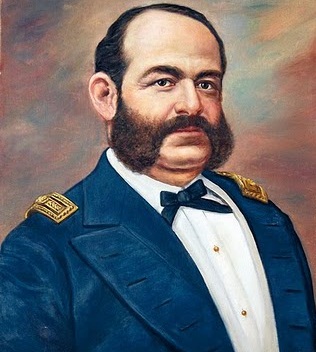
Today is a holiday in Peru - it's the anniversary of the Battle of Angamos. This was a naval battle that took place during the War of the Pacific in which one of Peru's greatest heroes, Adm. Miguel Grau, was killed. He was known as the Cabellero de los Mares - the Gentleman of the Seas - by his enemies for the way he always acted with honor during battle. He warned crewmen to leave ships before attacking, and rescued survivors from the seas. The Chileans were nearly as distraught at his death as the Peruvians.
The loss at Angamos - and the loss of Sr. Grau and his ship, the Huascar - was a turning point in the war of the Pacific. Without Grau to protect the coast, the Chileans had complete control of the seas, and the Chilean army was free to move up the coast.
So, today, let's raise a glass of Pisco for the man whose passing caused his enemies to mourn his loss. Viva el Cabellero de los Mares!
Only a week after posting the ad in El Comercio, our little house has been sold to a lovely young couple. And we are out of credit card debt, just like that.
But more exciting, we get to buy a car! A car that my husband can use as a taxi! He's very excited about having an opportunity to really make some money. He loves the drywall business, but it's just not a sustainable career here in Peru. There isn't enough demand and there's far too much supply - so when he does get a job, he rarely makes more than S/.60 (60 soles) a day - that's about $20. Not good for the household budget - if he worked every day, he'd barely make enough to feed us and pay for his own transportation. And unfortunately, he doesn't work every day - we're lucky if he has work for half the month.
So - we're doing what it seems that most Limeños with a car do... they start driving a taxi. My nephew has been driving a taxi for about 4 months now, and is making more than double in a day what my husband was making in drywall. Even when you factor in gas and insurance, it comes out to very decent money, by Peruvian standards.
So - advice to anyone who wants to move to Peru: Yes, the cost of living in Lima, Peru is very low. But the wages in Peru are very low in comparison to the cost of living - one of the lowest rations of income to cost of living in S. America. It's important that you have money from somewhere else - for instance, I have my house rental in the US - in order to make it. Or, be ready to invest in a business and work hard! I've seen a lot of people come to Peru thinking they'll teach English and live large... well, teaching English isn't as easy in Peru as you might think it is. Although it can be enough to live on, it takes a lot of work, long hours and putting up with a lot of crap.
But don't let that throw you off of choosing Peru! It IS possible to have a decent life here on the cheap - I do! I just want to make sure that people understand it's not going to be easy if you don't have a backup income.
Completely written and maintained by my friend Sharon de Hinojosa, the UPL is the best place I know of to go when you need any information about Peru. She has page after page of anything you could think of needing to know - from immigration issues to settling in to what to do in your free time.
I really recommend it to anyone that is planning on living in Peru, or even if you just plan a long term visit. I bet you'll find something to help you out, and plenty of things you never would have thought to ask.
Like a lot of people, we've been having to pull our belts tight lately. And eating cheap means eating a lot of chicken. I mentioned in the last post that I can usually get three meals out of one chicken. The first meal is usually something that uses chicken parts - typically the legs and thighs. Today, I cooked one of those meals, a delicious Peruvian dish called seco de pollo. "Seco" literally means 'dry', and signifies a stew, as opposed to 'aguadito' (meaning watery) for soup (that's aguadito in the picture).
I start with a whole chicken, which I wash thoroughly, pat dry with paper towels, then cut up into parts. I cut up into quarters, then separate the legs from the thighs, and use those 4 pieces for this meal. Finely chop up an onion. Take a bunch of fresh cilantro and stick it in the blender with enough chicken broth to make it paste-y, maybe 1/4 to a half a cup. Clean the cilantro first - make sure it doesn't have any large stems or icky pieces in it. I don't know if it's available in the US, but here in Peru you can buy cilantro in a jar, already pureed. If you can find it - maybe try a Latin market? - that takes some of the work and clean up out of the recipe.
In a large pot or dutch oven, heat a little oil, then drop the chicken in to brown. You don't want to cook it through, just lightly brown it on both sides. While the chicken is browning, I get my peas ready - a large handful of pods. By the time I'm done cutting up the carrots, the chicken should be done browning. Take the chicken out, set it to the side, and put the onion in the pot. Add in a couple or three cloves worth of minced garlic, and if you want, some aji amarillo, and saute it all together for a couple minutes. Aji amarillo is a Peruvian chili pepper, which you should be able to find at the Latin market - if not, use a little finely minced jalepeno or similar pepper.
When the onions start to turn translucent, add in the cilantro mix and about 4 cups of chicken stock. Add in the peas and carrots. Peel 4 medium to large potatoes, cut into quarters and add them to the stew. Put the chicken parts back in, and cover and let it cook until all the vegetables are soft and the chicken is cooked through.
Add salt and pepper to taste, and serve with a big pile of white rice.
What is it? It translates to 'Cuban-style Rice' and it's my kids' favorite meal. I could cook it 3 or 4 times a week, and they'd never get tired of it.
It consists of a healthy-sized serving of rice, eggs fried over easy, and fried plantains. That's it! It's great for when we've got a lot of leftover rice. Plantains are plentiful here, so that's never a problem.
It's a very popular dish in Spain, from what I understand, although they serve it with tomato sauce over the rice. Add a small fried steak to it, and it suddenly becomes 'Bistek a la Pobre' - 'poor man's steak'.
I use a rice cooker to make my rice. Before I moved to Peru, I never really made regular rice - I always bought Minute Rice. But the Peruvian diet consists of massive amounts of white rice, so it was necessary for me to be able to cook large quantities. I got a 4 qt rice cooker, and after a lot of experimenting, I got the 'Peruvian style' down pretty well.
I usually cook 1 kg of rice at a time. Put the rice in a strainer, and wash it under running water until the water runs clear (or mostly clear). Let as much water as you can run out of it, then put it in the rice cooker.
Next, I add about 2 tbsp of oil - a little extra won't hurt. I use soy oil, but you can use whatever you want. You may want to leave the oil out - it won't hurt the flavor. However, I find that the grains don't clump and stick with the oil.
Next, add in your seasonings. For Peruvian style rice, it's important to add salt and garlic. I add 3 large pinches (maybe 1 tbsp or a little less) and about 1/2 tbsp garlic powder. HOWEVER - I found a new product from Maggi made just for seasoning rice, called 'SazonArroz' in Spanish, and I use that now. You can also put in about 1/2 cup of finely chopped onion.
Finally, the water. In the rice cooker, I find equal parts rice and water work fine - so 1 Kilo of rice = 1 Liter of water. But, if you're cooking a smaller amounts of rice, sometimes all the water evaporates before the rice is fully cooked - so, i usually add a couple tbsps extra of water. Dump the water in, and mix it with a wooden or plastic spoon, so as not to scratch up your non-stick coating.
Turn on the rice cooker, and let it run through it's cycle. I've got a simple one, with just a on/off switch, that pops up like a toaster when it's done. When the cooking cycle finishes, I use my wooden spoon to 'fluff' up the rice some, stir it around a little. Don't stir too vigorously, or you'll get broken rice that clumps and sticks. Just enough to scrape the bottom and move it around a little. Put the top back on, and leave it about 5-10 minutes. After that, it's ready to serve.
I live in Peru, and a lot of things I took for granted when cooking are either not available or are so expensive they just aren't always worth buying. One of those things is canned tomatoes. They're here, but they're too expensive to use as a regular ingredient. So, I started using regular ripe tomatoes a lot more often, and it's actually so easy, I've come to prefer using them over the canned for most things. Here, then, is my way of preparing my tomatoes.
I start with a glass casserole dish (2 quart). Add water to nearly fill, then put the top on and stick it in the microwave long enough to get the water just to boiling. CAREFULLY remove it from the micro! While the water nukes, take your tomatoes and cut a X-shaped slice in the bottom of each one. (Of course, you can always do this on the stove top in a saucepan- I prefer the microwave because I have a super tiny stove, and am usually cooking other things while I do this)
Again, very carefully, using a spoon, lower the tomatoes into the water and leave them for about 30 seconds or so. Doesn't matter if you leave them longer, since usually you'll be cooking them later anyway. Take them out, run them under cool water so you can touch them, and then peel the skin off, starting at your little X-slice. You'll find the skin will slip right off.
Once you've got your tomatoes peeled, it's a simple matter to just crush them by hand and clean the seeds out of them. If you want, once you have the seeds out, use a knife to cut up the bigger pieces.
And there you go, fresh tomatoes, peeled and deseeded and crushed, ready to add to your recipe. You can add this to soup recipes in place of canned tomatoes. Just remember that you'll need to adjust seasonings, because this won't have any of the salt or other seasoning that canned tomatoes often have.
Of course, my first day of blogging my food, and it's a day we went to the restaurant. :D However, I also did some shopping, so we'll talk about that a bit, too.
The boys got out of school early today, so we walked to Alex's restaurant together. I actually don't know if this restaurant has a name - there's not one posted. But, the cooks name is Alex, so I'll call it Alex's restaurant - not to be confused with Alice's. ;) Actually, it's a family run business - Alex and the two servers are brothers. They have a lot of kitchen help, and the place is always packed. It's only open for lunch - they open around 11:00, and close when the food is gone, usually around 3pm. I love going there. All the meals include soup or an entrada, and then a main course (segunda). The entrada is often papas a la huancaina or papas ocopa. I'll have more information on these another time, when I either cook them, or have them at the restaurant.
Prices at Alex's are extremely reasonable, even by Peru standards. A full meal of soup/entrada, main course and drink runs from 3.50 soles to 5. soles. Today's exchange is about 3.10 to a dollar, so we get each meal for well under $2USD each.
To start, we all got the soup, which was a chicken soup with semolina (sort of like grits, but made from wheat - like cream of wheat). It's mostly broth, with giblets, neck and feet, and a little bit of celery, carrots and potato. However, we didn't eat it - we had it packaged to bring home. It keeps for a couple days, and I often give it to the boys for their 'lonche' in the evening.
David had pollo frito. This is his favorite meal from this restaurant. It consists of a single piece of chicken (usually a breast or thigh) that is flattened, seasoned and pan fried (frito means fried) - not breaded. The plate includes a good salad (romaine, tomato, beets, carrots, onion, broccoli with a lemon vinaigrette), rice and french fries. He ate every bit of it today.
Franco prefers the suprema de pollo, and that's what he had today. It's the same meal as David, except the chicken is in the form of a breaded cutlet. He didn't eat all of his rice today, but did pretty well with the rest of it. Not bad, considering they had a bunch of junk food today at school - it was a party day.
I opted for the lomo saltado today. 'Lomo' is loin - in this case, beef loin. It's a Peruvian/Chinese fusion dish. (There is a very large Chinese community in Peru, and they've had a big influence on the food) It's basically a stir-fry, with finely chopped beef, potatoes, chopped tomatos and onions quickly sauteed together with soy sauce. Cilantro is added at the last moment. This is one of my favorite Peruvian dishes to eat AND to cook. The next time I cook it at home, I'll take pictures and post the recipe proper.
After we ate, it was time to hit the supermarket. I didn't buy much, just enought to get us through the next few days - about $25 worth. I bought the boys a frozen pizza, and some bacon to put on it. Bacon here is leaner and not as smoky as bacon in the US, but it's still pretty good. I saved some of the bacon to use for the lentil soup I'm making on Friday. I don't usually buy bread at the grocery store because the bakery is cheaper. But today I was tempted by the sight of fresh potato bread. It is a delight - thick crust, and super chewy with a heavy, earthy flavor. Super stuck in the oven for a minute and then served with a little butter. That with some of the soup we brought home is what I had for dinner tonight.
This was a great little blog while it lasted, but we needed more! So we've moved the whole kit'n caboodle over to My Life in Peru. We hope you'll come and join us over there for more madcap adventures and delicious Peruvian foods.
I got tired of life happening while I made other plans, so I quit my job and came to Peru. I live here with my Peruvian husband, two sons, three dogs and various other family members, depending on the weather.
If you click on or purchase from one of the advertisers displayed on these pages, it helps me to keep this site going. Thanks!

![Reblog this post [with Zemanta]](https://lh3.googleusercontent.com/blogger_img_proxy/AEn0k_vCyA6ODTk4S-x58chr-GiZbA6araVfNJMzVvwBa0RdFNyqJD6fBlAvWs8myTPhYQIzrStJi_sTB9JfEJdFjzec4YuQzgKOBU_yIq-JdpPi6VKzmoZx4goDXmnZ8tknvnX9q22ve77NS5dhXDX-vOi2=s0-d)


![Reblog this post [with Zemanta]](https://lh3.googleusercontent.com/blogger_img_proxy/AEn0k_thD0Rmcu53H634OrqoeFVYL7PniQx1giiAqhwAU9hX0sDZ4HZBGwIzd9gU5mP6qgIFuSd21dqXMp0IcdNGv-aWpR-SCR0Q1raJBGcXm5n4vezlEg_whC5jeFM2IwP6tPyn5uy47aJhbVkHc8-yCz4=s0-d)
![Reblog this post [with Zemanta]](https://lh3.googleusercontent.com/blogger_img_proxy/AEn0k_u6gzDNwP8hnuiDITKfk1q26pWXDCPg7v4b5O7RoFRE1TN0jmGDoCVyLz4tt8AfjYp3MD8UPxbKjetpVkMdkAxvgDB45t2-xJpGAhS-3HyZsaGnNtqSjBjDgTPbe8K5_YfEOSVMTLMVmiXpcKz8HCWY=s0-d)
![Reblog this post [with Zemanta]](https://lh3.googleusercontent.com/blogger_img_proxy/AEn0k_vfGe0urUvzi1iTkLBnmJCNvayZ9Pp86Wq425k027sl-p0gEJJL0yEg1-kQoxgjIICsckA511E6fc0EbO_Qka8QZ--GxHbn8M-GNfyPElLFwEZ3OpoSNnEBdpQuXFLJs1dtYOgG0ArKviMsPpHVZDHM=s0-d)

![Reblog this post [with Zemanta]](https://lh3.googleusercontent.com/blogger_img_proxy/AEn0k_sdCDeJ0NBMLl2LYD9Pg-06WDTigQ9vR3XcagPnBzTIBcIdDnMBJUFCO114I5mLOYMeKfsFPxLP1ttNDy7MwBNErNpq24lDk8jVEsFwZKYSkEfsNC7E1VjtI3axB2WXcWskvQBtu14E0Ws9xDDintg=s0-d)

![Reblog this post [with Zemanta]](https://lh3.googleusercontent.com/blogger_img_proxy/AEn0k_vg_EXEoFW3fXPMMROGogDTp3GD_Q9d7V4Qd7w2rDj-kEgVqy9qk9EP175NILG2EGCWYnPOtZS6bRD-02QImZxRtQ-IMwZJIvz2vcVSx_TfvEfEaAIe1edbD4CgcagYzIxATnHG1e9DJCCQUQ0hpDil=s0-d)
![Reblog this post [with Zemanta]](https://lh3.googleusercontent.com/blogger_img_proxy/AEn0k_tuN-bl1tYXI-4CqM8dt9CW2bkB0WsbacteRGIfXqy9CODIdC6DCasFWx4MRvVscGispaWA3j6lWz1FRJo00wp4wHYA6e8Nm7WPbCcgCxb8kVxOV8TWyeCwaNeGMXwASB1zmix7TKRX4xy6p0MTt5NP=s0-d)

![Reblog this post [with Zemanta]](https://lh3.googleusercontent.com/blogger_img_proxy/AEn0k_tmGf6BYGdaWCD89TzCUCJcPZ3HSXv4XchqtbY9EiNC_ATcNtagrf6rEO6pd0t0y5Bjbn03awutXbtpNBQBc84n6tII5FME1Y54MFYv-rI1WUMBhrN5sFFrIBtLviYpTBupUL3s4Q8jj3a9ll16XlRY=s0-d)

![Reblog this post [with Zemanta]](https://lh3.googleusercontent.com/blogger_img_proxy/AEn0k_ugsXEBJSRFhK25S3kLpWFKcNSRWW0BX3zwMI0CVvahuPQJQCb4PV8MBeJvMQGlLB7_BabpdY1EgChoqjD9AkKlgZYGVXYokitmnQ5RP6-pCI1M_OkEk4t5jsgRZuSe_tjnovIl__9JG7I_YN1Ag0G4=s0-d)

![Reblog this post [with Zemanta]](https://lh3.googleusercontent.com/blogger_img_proxy/AEn0k_teAso15KTX8HX9nxXsxNTFY_Q58T6Le-Bf_ifo35qIQXYURf3Hbl6VLg-_QHtpSO5B6TLGXaPHEPDjfvZFpUa4JeZ8xPMa4HuY2mcReVgRN_7zXWPGsJ0Wvn1IolR2ANCB1EnyYXTggsgiaxWOqqLz=s0-d)

![Reblog this post [with Zemanta]](https://lh3.googleusercontent.com/blogger_img_proxy/AEn0k_tRxRyzVPk7urd8--xMearhVWtXLBPDYD61w-JO8pcpCbloZ46jQTybFsAadY-r24K7lT6zLPT5pQIWflVlqMZpW14lnUeBsgY_ojmhbkj21tqm1mYUaHRQDVT9UD9qTo82D5EQH3yZzfJXL0Wa-tI=s0-d)

![Reblog this post [with Zemanta]](https://lh3.googleusercontent.com/blogger_img_proxy/AEn0k_sBGHf1dUYubLymlu5RjN9FMrTwFkRD5R_Oe2ScEWss0d1H6tK7j1dh7BTmmqKp140_7KcIog18AvA_qOqviO0B7fWcqSr0CZksKZJUd_lpTyVSW1N0SJL8_3IA-zIGPa4L2XaP-FKel6EhH5hvXZ1_=s0-d)

![Reblog this post [with Zemanta]](https://lh3.googleusercontent.com/blogger_img_proxy/AEn0k_tfPAgzsMgkfbcxZS8amC_nS8889yKEFTy_L8s7Vf6N4dEDyx4SuxZvOc34Dn-tkjPF8j-qYCIKKl49w1GXHbr4jixCmeEte_RhB2y4MN3z4kgQg-AAtfaGQgo985BhudF71IurMAWheNAgkALiVf9O=s0-d)

![Reblog this post [with Zemanta]](https://lh3.googleusercontent.com/blogger_img_proxy/AEn0k_vz2VJkNq6V2kU2RcII4XSpibWPRlQZsHT6m8s1NOlhj_QIzADXu8idgBGLyyLQoyHUuc25xSz6b1mn-1yLPqOrqn0xB_KUaFjV6n7BwBOYECZIW0rDH-CAoGOvYax9J9539fbBLI-KFY4qyCXoG50h=s0-d)

![Reblog this post [with Zemanta]](https://lh3.googleusercontent.com/blogger_img_proxy/AEn0k_velm1qGkemigX4o1caIs0l4PF5U9Ti19rVl8QVoU3YLCVCQ_IbP1mNrr8gMLiVxMTL3n2NWfyUGpCp9QDrLVEHYTk-VnSAS3o7FiTQsAYdKn4gQPQpog1Nru4m_HvjJSGC6GWU08_0mV0d3GDP4IzW=s0-d)

![Reblog this post [with Zemanta]](https://lh3.googleusercontent.com/blogger_img_proxy/AEn0k_s1i5mxAHSNfESATYj4Td-zwuOVfg7K0CEvo9s8AwMMea_JiuS5boKHnrXhFb0lB-CMLU8juyFYydVOAgALqx3I34UXWP-mZ5jWzUVlUbUT0D8_JqPJ55vJNp9wsROCmywUJQPxJ_CD4dEEhoqHNhU=s0-d)

![Reblog this post [with Zemanta]](https://lh3.googleusercontent.com/blogger_img_proxy/AEn0k_unPWDIl_cXkhdnmrhWVX_oCwvJNudk0PiEWuRYuFDqygSIBSrrKNStLhRudxXc35Cqc84BS75uFJ0J1XMhokLse0-UhdT24v5q9AqmIkMPHViM5WC63ScXVM2pMCTHhJCBr7FaRE6QjZogi8Y0fQ2j=s0-d)

![Reblog this post [with Zemanta]](https://lh3.googleusercontent.com/blogger_img_proxy/AEn0k_vE76oNwxvFHkbV7xulNvDgbkPLpQwSaf8uxF7iiBTElFslaJ78swG2G94eFSZjtjcTKNynabzUf5B4gqhmJHIunnMx9OiuTDPfB-CIKtu7QtVDXregvz_n7s6FCN6UBjQ4sacPsMkXYbSbitERDPb6=s0-d)


 Posts
Posts