Back in November, I posted the recipe for one of my favorite 'entradas', papas a la huancaina. But there's another dish that I love, very similar, called ocopa. Now, I have discovered that there are different kinds of ocopa - ocopa, ocopa a la Arequipena (Arequipa style), and ocopa a la Limena (Lima style). The kind I've learned to love is the Lima style. It's delicious creamy and with a peanut flavor that's a real switch from the typical food here.
Now, to be honest, when I'm cooking at home I usually take the short cut and buy a pack of Provenzal Ocopa mix - quick, easy, just mix it with milk and oil and it's ready to go. But, if you do want to make it from scratch, it's not that much more difficult.
1 kilo (2 pounds) of papa amarilla, boiled and sliced into half inch rounds (Yukon Golds work great for this) 500 grams of onion, diced 100 grams vanilla cookies (vanilla wafers will work) 50 grams of queso fresco (ricotta, feta or farmer's cheese can substitute) 50 grams of peanut, chopped into very small pieces. 5 ají verde, de-seeded 6 cloves of garlic, peeled evaporated milk
1) In a frying pan with a tbsp. of oil, saute the garlic, the onion and the aji until the onion is translucent and everything is soft.
2) Put the onion mixture in the blender or food processer, and blend together with the cookies, the cheese, and the peanuts. You don't want to over-blend, just until you have a creamy sauce that's slightly thick. If it's too thick, add evaporated milk until you get the right consistency.
3) Serve the potatoes on a bed of lettuce, and spoon the cream sauce on top. Decorate with black olive slices if you'd like.
Quinoa is a grain-like food that's native to Peru. The Incas are said to have thrived on it, and called it 'the mother of all grains'. It's a very popular dish here. I say it's 'grain-like' because although it's cooked and served like a grain, it's actually a seed, and not grown from a grass plant, like the true grains are. The quinoa plant itself is actually more closely related to the beet and spinach plant than it is to rice or wheat. When I first came to Peru, I had no idea how to cook it. Here's a recipe I learned.
What You Need:
1 1/2 C of quinoa
2 C of chicken broth
1 t ground cumin
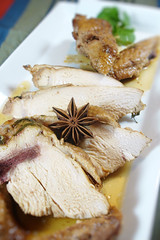
1 1/2 lb. turkey tenderloin
1/4 t of salt
2 small onions, sliced (or scallions if you can get them!)
1 zucchini, halved lengthwise and sliced
2 C of fresh spinach leaves, roughly chopped
1 red bell pepper, cored, seeded and sliced
1 C of salsa
How to Make It:
Preheat the oven to 450 degrees.
Spray a cast iron Dutch oven with cooking spray.
Pour the quinoa into the prepared pan.
Add the chicken broth and cumin and stir it all up.
Place the turkey into the pan.
Sprinkle in the salt.
Add the onions
Layer the zucchini into the pan.
Spread the spinach leaves over the zucchini
Scatter the bell pepper slices over the spinach.
Spread the salsa out evenly over the top.
Cover and bake 30 minutes or until the vegetables are fork tender.
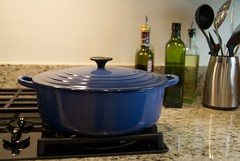
This is a great all-in-one meal. I love it when I don't have to cook more than one cooking dish, don't you? That's a Le Creuset French Oven in the picture up above, you can learn more about cooking with one if you click on the pic.
I would imagine that this can also be done in a slow-cooker, but unfortunately, I haven't been able to get one here to Lima yet. I'll keep it on the wish list. ;)
Since I was a kid, I loved banana sandwiches - sliced banana and mayonnaise on white bread. As I got older, I started experimenting. Wheat bread was a good choice. Banana and peanut butter was good, especially with a little honey. Any kind of nuts tossed on for crunch.
But the Florida cracker in me won out - and my favorite is peanut butter, bananas and Kraft Mayo on white bread. Good, soft white bread, with chewy crust. I like to think I'm being a little bit healthy with fruit and peanut butter.
A lot of people think the combination is disgusting. Most of those people have never tried it. ;) I don't mind trying unusual foods, that's why I've eaten everything from raw fish to guinea pig since I've lived in Peru. There are some things I won't eat - tripe is one of them. Actually, most things made of intestine are off limits for me. And it's not because I think it's gross, it's because I've tried it and didn't like it. (I actually didn't know what it was the first time I ate it, I just didn't like the taste)
So tell me - what is your favorite weird food? Maybe it's an unusual exotic food, or maybe it's a combination that most people find weird, like scrambled eggs and grape jelly (yum).
Hmmm... I seem to like a lot of weird combinations.
Breakfast is the easiest meal of the day around here. Since the boys don't have school until 1pm, we're in no rush. Which is great - since I don't have to worry about them rushing to get out the door on time, I can let them be responsible for their own breakfast. At first it was easy, they were happy to have cold cereal with milk or yogurt every day. Yogurt is more common in a liquid, drinkable form here in Peru - perfect with cereal. But, although they said before that all they ever wanted for breakfast was cornflakes, they're now telling me they're a little bored with it. So I've started coming up with some things I can have ready in the fridge for them to do on their own. And I started thinking, most of these things are so quick and easy, they would also work for people who ARE in a rush in the mornings.
1) Have a piece of casserole. I'll make a breakfast casserole, like a quiche, during the day. When it cools, I can cut it up and put portions in freezer bags - the boys just take one out, dump it on a plate and microwave it for a few seconds.
2) Yogurt. Yogurt is a healthy, economical and fast. When you are eating on the run, grab a container of yogurt and some dried or fresh fruit. I like vanilla yogurt with bananas cut up in it, and then sprinkle it with some All-Bran cereal for extra fiber.
3) Breakfast shake. If you keep some cut up fruit in individual bags in the freezer, this is a super easy breakfast - even my kids can make it. I put frozen fruit, yogurt and honey to sweeten in the blender. Good choice if you're on the move, because if you put it in travel mug with a straw, you can take it with you in the car.
4) Pancake Rolls. Whip up a batch of pancakes and freeze them in short stacks of three. The kids can heat them up in the microwave later, spread them with peanut butter and jelly and roll them up. If you have some frozen sausage links (which I DON'T in Peru!!) you could make pigs in a blanket by microwaving a few sausage to go with it.
5) Breakfast sandwiches. In the evening, while you are getting things ready for the next day, grill up a few breakfast sandwiches. Choose whatever you like: turkey slices, ham slices, cheese, tomato, bacon, etc. When the sandwich cools, cut it into bite size pieces and put it in a container. In the morning, just grab a container; pop it into the microwave for fifteen or twenty seconds and breakfast is served.
My boys like being able to do their breakfast on their own, and it gives them a great sense of responsibility. And honestly, I appreciate the break - while they're doing their breakfast, I can work on getting a load of laundry in and making sure they have clean uniforms for school!
Chicken is probably the most common main dish around here. There are SO many ways to prepare it - arroz con pollo, seco de pollo, fried chicken and caldo de gallina (Peruvian style chicken soup), just to name a few. I've mentioned before how I can usually get 3 meals out of one chicken, and I thought I'd talk a little more about how I go about doing that.One of the best ways is to start out by roasting the whole chicken - you can do wonders with what you don’t eat for dinner. Here are some ways to make that roasted chicken appealing to the family.
Learn to slice a whole chicken. Slicing one properly makes it easier to remove the rest of the meat from the bone. The carcass can be used to create stock. Boil it in some water with a carrot, a whole onion and some celery until the rest of the meat falls off.
You can season the broth with herbs and spices - try garlic and a bay leaf. After it cools, pour it into jars for storage. Freeze it and have it ready to use for soups and casseroles.
Do your kids carry their lunches to school? Instead of buying lunch meat, slice leftover chicken breast for sandwiches. It will be a nice change from the usual lunch fare.
On the weekends, instead of ordering a pizza or going to McDonald’s, use that chicken. Cube a few pieces to toss on top of a salad with some cheese and croutons. Combine with peppers and onions in a skillet, then stir in some chili powder or taco seasonings to make filling for fajitas or soft tacos.
My guys don't care for the breast meat as a main dish, but will eat it up if it's cooked into a tallarin saltado (stir fry) or aji de gallina (chicken in a spicy sauce). Does your family like chicken pot pie? Add some of the chicken, along with vegetables (canned or frozen) and a can of creamed soup to a pie crust and you’ve got an instant dinner that takes less than an hour to prepare. It is a quick meal idea perfect for busy families. A salad on the side will make a complete and healthy dinner.
Chicken based casseroles can be made and frozen for future meals. The family may be all “chickened out” for the week, but that doesn’t mean you can’t make the most of the chicken you have left for future weeks.
Make your own soup with juicy chicken pieces and wide egg noodles - or use spaghetti noodles for Peruvian style.. That broth you jarred up will serve as a nice base and best of all it's already seasoned.Add noodles and sliced vegetables like carrots, celery, and onions to your soup. When the noodles are tender, add the chicken. Since it is already cooked it just needs to warn up. Ladle up a bowl for a light weekend lunch, or for 'lonche' in the evening with some fresh pan frances from the panaderia.
What are you doing with your chicken after dinner tonight? Try some of these ideas to make that chicken do double and triple duty to save on your family’s grocery bill. The best part is that the new meals are just as tasty as the original dish.
Today I cooked arroz con pollo for my guys - that's rice with chicken. It's a staple of pretty much every Latin American country, although they've all got their own special take on it. In Peru cooking style, it's sometimes called 'arroz verde' or green rice, because it contains a LOT of cilantro (also called coriander). It's usually served with papas a la huancaina, and often an avocado salad. Here's how I make my arroz con pollo.
4 chicken thighs (you can remove the skin if you like) 3 cups of rice vegetable oil 1 medium onion, finely chopped 2 or 3 cloves of garlic, finely chopped 1/2 cup of aji amarillo (yellow chili pepper - check your Latin market) finely chopped or liquefied 1 cup of cilantro/coriander - liquefied (see the recipe for seco de pollo for directions on doing this) 2 large handfuls of green pea pods - shell them, and use the peas, not the pods! About a half a cup of carrot cut up into cubes 2-1/2 cups of chicken stock/bouillon. 1/2 cup of beer Salt and pepper
Put about 1/2 cup of oil in a dutch oven or stew pan. Salt and pepper your chicken thighs, then brown them in the oil. Remove them from the pan, and then add the onion, garlic, cilantro and aji. Stir it around a bit until the onion starts to turn golden and translucent. Add the chicken back in and pour in the beer. Let it cook until the chicken is cooked through. Take the chicken back out and set it aside covered where it will stay warm - in a very low temperature oven or on the back of your range top is good. Put the rice, shelled peas, carrot and chicken stock into the mix. Add salt and pepper as necessary here, then cover tightly to cook the rice.
Serve the rice together with the chicken.
Ok - now for the truth - I can NEVER cook rice right on the stove top, so I do my chicken on the stove top, then throw everything into the rice cooker at the end and let it all cook together there. It comes out perfect every time.
If you are opposed to cooking with beer, just replace it with chicken bouillon. If you're short on time, don't feel bad about using a small can of peas and carrots instead of fresh. For more Peruviness, (that's like grooviness, only Peruvian) throw in a handful or two of Andean corn (choclo) if you can find it.
You might also want to add a little bit of thinly sliced red bell pepper. I don't because everyone in my house just picks it out - but if you look around on the internet, you'll find that a lot of recipes and pictures show it.
I've been sick, and not feeling up to cooking the last few days. Stupid headcold! But I had some ground beef thawed out and it was getting to the point where I had to use it, or I was gonna lose it.
So, I decided to make a meat loaf. Now, usually, I make 'souper' meatloaf with Lipton Onion soup mix, but I have run out and won't have anymore until January when Mom comes back. I had switched to using Good Season's Italian seasoning mix, but that's all run out too. So, I looked around in the cupboard and fridge, and took stock of what I had on hand, and this is what I came up with.
Pizza Loaf!
1 kg (2lbs) ground beef 1 tbsp Nature's Seasonings 1 packet of saltines, pulverized to powder 1/2 small can of tomato sauce (I used roasted garlic flavor) - save other half for later 1 tsp garlic powder 1 egg As much mozzarella cheese as you like.
I put all those ingredients except for the cheese together in a bowl and mixed until it was all incorporated. Transfer half of the mixture to a casserole or baking dish and flatten it out. Spoon a little of the remaining tomato sauce on and spread it around, like on a pizza dough. Next, add a layer of mozzarella cheese. I used thin slices, because grating it just seemed like too much work today. Spread the remainder of the meat mixture on top, flatten it out and press the seams together. This part was a little tricky, the sauce wanted to squirt out the sides. But I was prepared for that, and had made a little 'lip' around the edge of the bottom layer of meat, and flattened out the top layer as much as possible before laying it on top.
Cook it in a 350 degree oven for 30-45 minutes covered, then take the top off for the last 5 minutes. (I covered it with tin foil at the start, because I used a 9x13 pan instead of my regular casserole) Serve topped with the rest of the tomato sauce.
*Note - picture is NOT my pizza loaf - just a generic meatloaf I found on Wiki. We ate ours up faster than I could find the camera!
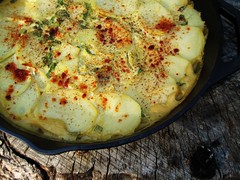
I roasted a chicken today, which always gets rave reviews. Unfortunately, I used my last envelope of onion soup mix, so next time I'm going to have to find a new way to season it. But the real jewel of the meal today was the scalloped potatoes. I made them once, a LONG time ago... back when we still lived in the casita, so at least 4 years past. I'm not sure why I waited so long to make them again. The Peruvian papas rosada (pink potato) are perfect - they cook well, and have a soft, creamy texture that goes well with the sauce. Here's how I made it.
5-6 large potatoes - enough to fill a 2 liter (2 quart) casserole 1 small onion 50 grams (about 3 tbsp) butter 30 grams (1/4 cup) all-purpose flour 350 ml (about 1-1/2 cups) chicken broth 30 ml (about 2 tbsp) mayonnaise Salt and pepper
Peel and slice the potatoes in very thin slices - helps if you have a mandolin slicer. Cut the onion in half, peel and also cut in very thin slices - as thin as you can get them.
Grease your casserole dish and layer the potato and onion slices with salt and pepper. Don't be shy with the salt and pepper.
In a saucepan, melt the butter.
Add the flour, and stir until it's a smooth paste.
Add the broth, and whisk, whisk, whisk!!! You want it smooth with no lumps.
Add the mayonnaise, and keep whisking until it gets thick and just starts to bubble.
Pour the mixture over the potatoes. Cover, and put it all in a pre-heated 350 degree oven. (175 Celsius) Let it cook for about 1-1/2 hours.
This is SO good. I'm a dolt for not taking a picture, to show you how delicious this looked. I sprinkled some paprika on top. You might try adding some chives, or maybe some chopped ham layered in with the potatoes and onions. Or sprinkle some cheddar in there.
I bet it wouldn't be hard to make this vegan, either.
This is easy and really filling. Give it a try, your family will love you.
This week has been lovely - the first signs of spring in the air. The sun has been out for a few hours every midday, which is a welcome change from the constant grey skies that are typical of Lima winters. The birds have been going crazy out in the huge bougainvillea behind my house - it's full of all kinds of little flying things. Lots of flowers blooming, too - my hibiscus has the prettiest triple yellow blooms.
Still cool in the evenings, though, so I'm still cooking food that's comforting and warming. Last night, I made a pork/broccoli/cauliflowerstir fry. I started with the biggest stock pot I have, and the water on to boil because I was going to be cooking a pound and a half of spaghetti. I put about 2 tbsps of salt in the water, and a glug of oil. I'm not going to get into the discussion of whether salt or oil is necessary when boiling pasta... but I use both. ;)
While I waited for the water to boil, I took my pork tenderloin out and started cutting it up into very small cubes - no bigger than 1". Then, same thing for a half a head of broccoli and a half a head of cauliflower - small, bite-sized florets.
By the time I got all that good stuff chopped up, my water was boiling and I added my spaghetti. I took out my big old saute pan, added some oil, and started searing the pork. I sprinkled some Aji-no-Moto on - that's MSG - and a little bit of salt. Once the pork was seared, I dropped in the cauliflower. About 2 minutes later, I added the broccoli. I sprinkled on some powdered ginger - about a teaspoon. Then I added about a cup of soy sauce and a tablespoon of white vinegar, stirred it all up, turned off the heat and covered.
Now, the spaghetti was done, so I drained it in the colander. Then, last step! I dumped all that pasta on top of the meat and veggies and stirred it all together with a bamboo spoon. Taste it and adjust what you think needs adjusting - a little more soy sauce? salt? ginger? Maybe a little chinese five-spice, or some red pepper if you like it spicier. It's all up to you.
I'm really tired of being poor. We're trying everything we can to dig out of it, though! I'm publishing more articles all the time, and Johnny's doing everything he can to get more work. Things won't be so bad once I get my house rental back on track. I've gone almost 2 years without making anything on it - every time one thing gets paid off, something else comes up. The only thing left to go wrong is the roof, but I think that's still got a few years left on it. Knock on wood!
Anyone with more advice on making money on the internet, I'm all ears. I'm trying to get more people reading this blog, and reading my articles, and I've also done some freelance writing that helped some. I know I need to get a real blog on my own site started, Blogger's great, but it's not really enough for what I want to do. I'd like to have a site where I can do a lot more travel Peru type articles, and sell some Peruvian jewelry. Maybe put some affiliate ads on there, and try to get some money rolling in! The kids need to eat, y'all.
Speaking of eating, we had grilled chorizos, rice and black eyed peas today. Super yummy.
Black eyed peas -
Chop up an onion, very fine. Get your stock pot out and put enough oil in the bottom to start sauteing your onions. As they cook, drop in a bay leaf, some basil(tsp) and garlic(another tspof the powder, or a minced clove). Let it all simmer together a couple minutes, then drop in two Maggi Bacon bouillon cubes. (Chicken or beef will do if you don't have bacon, but tsk, tsk) Add a couple tablespoons of water, and stir it all together with a wooden spoon until it's all dissolved. Dump in 500 gms of black-eyed peas and 3 liters of water (16 ozs of beans, 3 quarts of water). Cover and bring to a boil, then cut it down to simmer... Let it cook about 3 hours, checking that the water doesn't get too low - add a little more if you need to. THEN - add a couple tablespoons of tomato paste, stir it in and THEN taste - maybe you'll need more salt. And some black pepper.
Vegetarians can use vegetable bouillon cubes in place of meaty ones.
Serve with alongside meat and rice, and optionally top it with some chopped raw onion or Louisiana hot sauce. Or if you're my mom... ketchup. Anyway you like, it's good - Eat it up!
Like a lot of people, we've been having to pull our belts tight lately. And eating cheap means eating a lot of chicken. I mentioned in the last post that I can usually get three meals out of one chicken. The first meal is usually something that uses chicken parts - typically the legs and thighs. Today, I cooked one of those meals, a delicious Peruvian dish called seco de pollo. "Seco" literally means 'dry', and signifies a stew, as opposed to 'aguadito' (meaning watery) for soup (that's aguadito in the picture).
I start with a whole chicken, which I wash thoroughly, pat dry with paper towels, then cut up into parts. I cut up into quarters, then separate the legs from the thighs, and use those 4 pieces for this meal. Finely chop up an onion. Take a bunch of fresh cilantro and stick it in the blender with enough chicken broth to make it paste-y, maybe 1/4 to a half a cup. Clean the cilantro first - make sure it doesn't have any large stems or icky pieces in it. I don't know if it's available in the US, but here in Peru you can buy cilantro in a jar, already pureed. If you can find it - maybe try a Latin market? - that takes some of the work and clean up out of the recipe.
In a large pot or dutch oven, heat a little oil, then drop the chicken in to brown. You don't want to cook it through, just lightly brown it on both sides. While the chicken is browning, I get my peas ready - a large handful of pods. By the time I'm done cutting up the carrots, the chicken should be done browning. Take the chicken out, set it to the side, and put the onion in the pot. Add in a couple or three cloves worth of minced garlic, and if you want, some aji amarillo, and saute it all together for a couple minutes. Aji amarillo is a Peruvian chili pepper, which you should be able to find at the Latin market - if not, use a little finely minced jalepeno or similar pepper.
When the onions start to turn translucent, add in the cilantro mix and about 4 cups of chicken stock. Add in the peas and carrots. Peel 4 medium to large potatoes, cut into quarters and add them to the stew. Put the chicken parts back in, and cover and let it cook until all the vegetables are soft and the chicken is cooked through.
Add salt and pepper to taste, and serve with a big pile of white rice.
Last night, I made chicken soup for dinner. When it's just the four of us, I can get 3 meals out of a good sized chicken. The first night, I'll use the legs (for the boys) and thighs (for the grownups!) in something that calls for parts - fried, or in Peruvian chicken stew. Or, I'll roast the whole thing and just eat the leg quarters the first night. Moving on, I separate the wings from the breast, leaving a good amount of meat at the joint of the wing. I'll use the breast for something that calls for cut up or shredded chicken. Aji de gallina or maybe a stir-fry. Finally, I'll use the wings, feet, neck and liver to make soup.
Yeah, you heard me. Feet.
Don't you judge me!
So - long intro later, with my mom and Nicky visiting, I can only get 2 nights out of a chicken. We had fried chicken Wednesday night, and last night I made chicken soup. This is how I did it.
I had a half breast and a wing left over from frying, plus the feet and neck. I put all of that in my stock pot with a whole onion and a whole carrot and a 4 finger pinch of salt. (That's where you use your thumb and and three fingers to grab salt out of the bag - it's about a tablespoon in my case) Covered it with water, and brought it to a boil, then let it simmer for about an hour.
Once the chicken was done, I ran it through a strainer into my OTHER stock pot. You can use a large bowl or whatever you've got - the point is to get the stock clear and clean. I don't like little bits of unknown chicken parts and skin and stuff floating in my soup. Toss out the onion, cut up the carrot. Put your broth back on the stove. Now at this part, I do what some people might consider cheating - I toss in a couple of bouillon cubes. I like my soup really chicken-y. I also added about a teaspoon of poultry seasoning(I used a spicy one), 2 minced garlic cloves and a bay leaf.
This is when I added another chopped up raw carrot to the broth and let it start cooking. Save the already cooked carrot to drop in at the end - you don't want it over cooked. I also cut up a couple potatoes in bite size pieces and put that in. While the veggies are cooking, I worked on getting all the meat off the chicken carcass. I set the feet aside -- if you cook them too long, they start falling apart, and I know not everyone wants pieces of chicken feet in their soup. But my boys love them, so I saved it aside for them. Dump the meat into the soup. Let the veggies cook for about 20 minutes, and then add the other cooked carrot from earlier AND about 150 grams of spaghetti. Well, that's what I usually add - last night I used up a pack of alphabet noodles that I had hanging around. Let it cook until the noodles are soft, then give it a taste. Add salt and pepper to your taste.
What is it? It translates to 'Cuban-style Rice' and it's my kids' favorite meal. I could cook it 3 or 4 times a week, and they'd never get tired of it.
It consists of a healthy-sized serving of rice, eggs fried over easy, and fried plantains. That's it! It's great for when we've got a lot of leftover rice. Plantains are plentiful here, so that's never a problem.
It's a very popular dish in Spain, from what I understand, although they serve it with tomato sauce over the rice. Add a small fried steak to it, and it suddenly becomes 'Bistek a la Pobre' - 'poor man's steak'.
I use a rice cooker to make my rice. Before I moved to Peru, I never really made regular rice - I always bought Minute Rice. But the Peruvian diet consists of massive amounts of white rice, so it was necessary for me to be able to cook large quantities. I got a 4 qt rice cooker, and after a lot of experimenting, I got the 'Peruvian style' down pretty well.
I usually cook 1 kg of rice at a time. Put the rice in a strainer, and wash it under running water until the water runs clear (or mostly clear). Let as much water as you can run out of it, then put it in the rice cooker.
Next, I add about 2 tbsp of oil - a little extra won't hurt. I use soy oil, but you can use whatever you want. You may want to leave the oil out - it won't hurt the flavor. However, I find that the grains don't clump and stick with the oil.
Next, add in your seasonings. For Peruvian style rice, it's important to add salt and garlic. I add 3 large pinches (maybe 1 tbsp or a little less) and about 1/2 tbsp garlic powder. HOWEVER - I found a new product from Maggi made just for seasoning rice, called 'SazonArroz' in Spanish, and I use that now. You can also put in about 1/2 cup of finely chopped onion.
Finally, the water. In the rice cooker, I find equal parts rice and water work fine - so 1 Kilo of rice = 1 Liter of water. But, if you're cooking a smaller amounts of rice, sometimes all the water evaporates before the rice is fully cooked - so, i usually add a couple tbsps extra of water. Dump the water in, and mix it with a wooden or plastic spoon, so as not to scratch up your non-stick coating.
Turn on the rice cooker, and let it run through it's cycle. I've got a simple one, with just a on/off switch, that pops up like a toaster when it's done. When the cooking cycle finishes, I use my wooden spoon to 'fluff' up the rice some, stir it around a little. Don't stir too vigorously, or you'll get broken rice that clumps and sticks. Just enough to scrape the bottom and move it around a little. Put the top back on, and leave it about 5-10 minutes. After that, it's ready to serve.
This was a great little blog while it lasted, but we needed more! So we've moved the whole kit'n caboodle over to My Life in Peru. We hope you'll come and join us over there for more madcap adventures and delicious Peruvian foods.
I got tired of life happening while I made other plans, so I quit my job and came to Peru. I live here with my Peruvian husband, two sons, three dogs and various other family members, depending on the weather.
If you click on or purchase from one of the advertisers displayed on these pages, it helps me to keep this site going. Thanks!
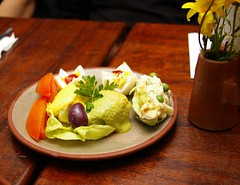 Image by Yogma via Flickr
![Reblog this post [with Zemanta]](http://img.zemanta.com/reblog_e.png?x-id=cc17336e-720e-4f02-8f05-55366748e399)


![Reblog this post [with Zemanta]](http://img.zemanta.com/reblog_e.png?x-id=6598b93c-ec9a-49e5-9351-b2501c374f58)
![Reblog this post [with Zemanta]](http://img.zemanta.com/reblog_e.png?x-id=dc4706dc-830c-4ab9-9c88-579bb40e616c)

![Reblog this post [with Zemanta]](http://img.zemanta.com/reblog_e.png?x-id=52965ba6-9e9f-404c-b204-5e28925f51e4)
![Reblog this post [with Zemanta]](http://img.zemanta.com/reblog_e.png?x-id=3a7e632a-1fd4-42c3-b197-5ae73439e82b)

![Reblog this post [with Zemanta]](http://img.zemanta.com/reblog_e.png?x-id=93605e99-7260-46c5-90ca-a8483f21f14d)

![Reblog this post [with Zemanta]](http://img.zemanta.com/reblog_e.png?x-id=af329132-0bc0-4193-8ef8-114e7d82886e)
![Reblog this post [with Zemanta]](http://img.zemanta.com/reblog_e.png?x-id=e64c20dc-fc40-4808-be59-021f64fe753c)
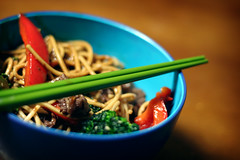
 , added some oil, and started searing the pork. I sprinkled some Aji-no-Moto on - that's MSG - and a little bit of salt. Once the pork was seared, I dropped in the cauliflower. About 2 minutes later, I added the broccoli. I sprinkled on some powdered
 ![Reblog this post [with Zemanta]](http://img.zemanta.com/reblog_e.png?x-id=07c56ea1-290b-403e-a783-ff2cde5557fa)

![Reblog this post [with Zemanta]](http://img.zemanta.com/reblog_e.png?x-id=ede02ea7-0574-462c-a050-e6a54998f68c)

![Reblog this post [with Zemanta]](http://img.zemanta.com/reblog_e.png?x-id=57b088bd-0ee4-498e-88aa-da07ab7d5470)

![Reblog this post [with Zemanta]](http://img.zemanta.com/reblog_e.png?x-id=ea27e4f2-1d98-41f3-8bf7-dfbdcd50b99b)
![Reblog this post [with Zemanta]](http://img.zemanta.com/reblog_e.png?x-id=229bd025-4282-4326-b83a-598edfeec238)


 Posts
Posts


